



Botswana’s mining future will depend less on extracting more minerals and more on building industries around them, Absa Bank Botswana has said, as the financial sector moves to redesign funding models for the country’s next mining phase.
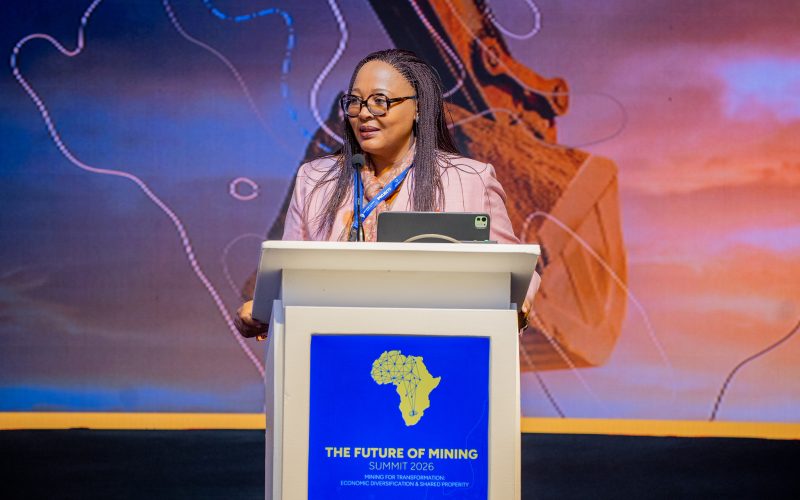
Speaking at the Future of Mining Summit 2026, Absa outlined a financing approach focused on supporting the wider mining ecosystem, including suppliers, contractors, manufacturers, transport operators and citizen-owned enterprises.
The bank said traditional mining finance, which focuses mainly on funding mining companies, is no longer sufficient as Botswana seeks to diversify beyond diamonds and develop value from emerging minerals such as copper, nickel, cobalt and lithium.
Absa Bank Botswana Managing Director Keabetswe Pheko-Moshagane said mining success should no longer be measured only by production volumes, but by the economic activity created around mining operations.
“As a key commercial bank in Botswana, we recognise that the next chapter of Botswana’s mining story cannot simply be about extracting more minerals. It must be about creating more value,” she said.
The bank has adopted what it calls an “ecosystem banking” approach, where financing is extended across the mining value chain rather than concentrated on mining houses alone.
Under the model, businesses supporting mining operations can access funding to expand capacity, improve competitiveness and participate in opportunities created by new mining developments.
Since 2019, Absa has deployed about P1.5 billion in enterprise and supplier development financing, supporting more than 200 small and medium enterprises and contributing to the creation of approximately 3,000 jobs.
Corporate Director Tebogo Giddie said understanding the mining lifecycle has become central to the bank’s financing decisions. She said mining projects require patient capital because they often take between five and 10 years to move from exploration to commercial production.
“We spend a lot of time understanding the value chain and making sure that at every stage we understand both the opportunities and the risks,” Giddie said.
The bank’s financing approach considers factors such as geological potential, technical feasibility, shareholder commitment and project execution capacity before increasing its exposure.
Absa said it has also expanded the use of blended finance structures, combining commercial funding with support from development finance institutions and institutional investors to unlock larger industrial projects.
The bank highlighted sustainability-linked lending and green financing as emerging tools that will become increasingly important as global investors demand stronger environmental and social standards from mining companies.The push comes as Botswana seeks to reduce its reliance on diamonds and capture greater economic benefits from its mineral resources.
Absa said the country’s opportunity lies in transforming mines into economic hubs that support local industries, create jobs and develop domestic capabilities.
The bank believes the future of mining finance will not be defined only by funding extraction, but by enabling businesses across the value chain to participate in Botswana’s mineral economy.