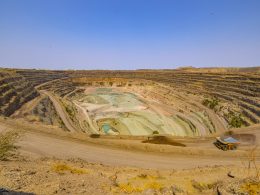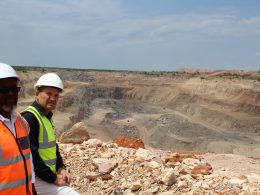




MMG Khoemacau has revealed an ambitious expansion strategy aimed at lifting its annual copper production beyond 200,000 tonnes as Botswana increasingly looks to critical minerals to drive future economic growth and reduce its dependence on diamonds.
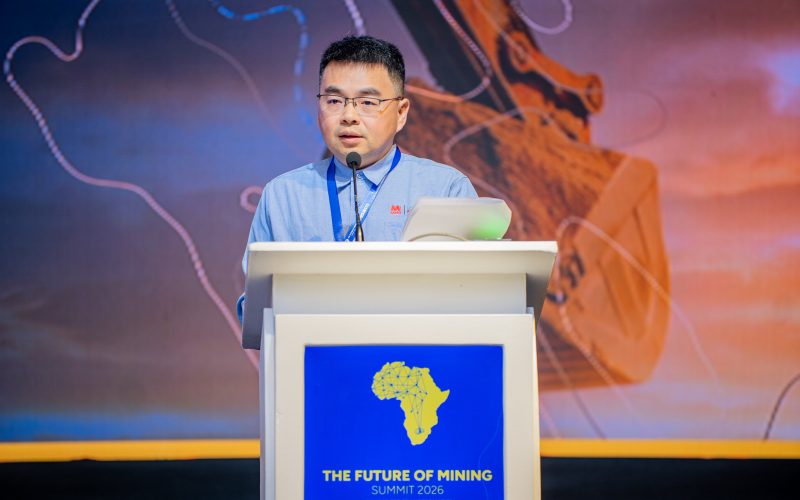
The expansion blueprint was outlined at the Future of Mining Summit 2026, where MMG Khoemacau Integrated Asset Strategy Manager Xiaoliang Liu said the company is pursuing a phased growth programme that combines exploration, operational optimisation and infrastructure upgrades to transform Khoemacau into one of the world’s leading copper mining operations.
Liu explained that the expansion is designed as a long-term strategy rather than a once-off investment. Production will increase progressively as new mining areas are developed, processing capacity is enhanced and operational efficiencies are unlocked across the business. Continued exploration is also expected to play a crucial role in extending mineral resources and supporting future production growth.
“We are pursuing a phased expansion through exploration, optimisation and infrastructure development to sustainably grow production beyond 200,000 tonnes annually,” Liu told delegates attending the summit.
The strategy comes at a defining moment for Botswana’s mining industry. For more than five decades, diamonds have been the backbone of the country’s economy, financing infrastructure development, education, healthcare and public services while generating the bulk of export earnings and government revenue.
However, prolonged weakness in global diamond demand, changing consumer preferences and softer prices have exposed the vulnerability of an economy heavily dependent on a single commodity. The slowdown has renewed calls for Botswana to accelerate economic diversification and develop new sources of long-term growth.
It is against this backdrop that copper is emerging as one of Botswana’s most strategic minerals. Copper is an essential industrial metal that underpins modern economies. It is used extensively in electricity transmission and distribution networks, electric vehicles, battery storage systems, renewable energy infrastructure, telecommunications equipment, data centres, construction and advanced manufacturing.
The global transition towards cleaner energy has significantly increased copper’s strategic importance. Electric vehicles require considerably more copper than conventional petrol and diesel-powered vehicles because of their electric motors, batteries and charging systems. Similarly, wind turbines, solar farms and electricity transmission networks all require substantial quantities of the metal, making copper indispensable to the world’s decarbonisation efforts.
As countries invest billions of dollars in clean energy infrastructure and seek to strengthen energy security, demand for copper is expected to remain robust for decades. For Botswana, these global trends present an opportunity to reposition its mining sector beyond diamonds.
Within this policy framework, MMG Khoemacau’s expansion represents more than a corporate investment. It aligns with Botswana’s broader ambition to build a more diversified mining industry capable of generating sustainable employment, attracting foreign direct investment and creating greater value from the country’s natural resources.
The company’s contribution to the national economy is also expected to grow significantly. With an anticipated mine life exceeding 20 years, MMG Khoemacau is projected to contribute approximately P1.5 billion annually in taxes and royalties while accounting for more than six percent of Botswana’s Gross Domestic Product (GDP). Such a contribution would further cement copper’s role as one of the country’s most important economic pillars.
In a further move aimed at unlocking long-term industrial value, a joint Botswana copper value chain analysis is currently underway between MMG Khoemacau and the Government of Botswana, with technical support facilitated by the University Queensland Sustainable Minerals Institute.
The study is expected to provide a comprehensive mapping of Botswana’s copper value chain, identifying opportunities for downstream development, local beneficiation and broader industrial linkages beyond raw mineral extraction.