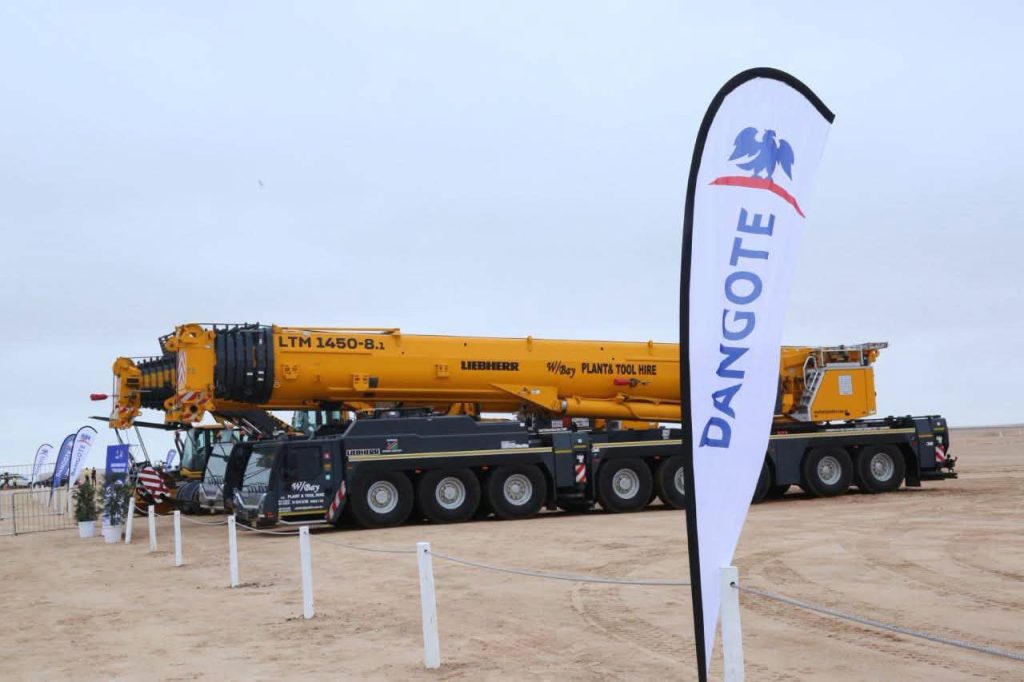
Namibia has taken a major step towards strengthening its energy security and regional trade following the official launch of the Dangote Namibia Tank Farm and Regional Pipeline Project by President Netumbo Nandi-Ndaitwah at Farm 58, Walvis Bay.
Valued at approximately US$2.5 billion, the landmark investment will comprise a petroleum storage facility with a capacity of 600 million litres and a proposed regional pipeline network spanning approximately 1,700 kilometres.
The development is expected to position Namibia as a strategic energy and logistics gateway for Southern Africa, improving fuel storage, supply and distribution while opening additional supply corridors for landlocked countries, including Botswana.
The project follows engagements between President Nandi-Ndaitwah and Nigerian industrialist and Dangote Group Chairman and CEO, Alhaji Aliko Dangote, which began in June 2025. Emphasising the project’s national importance, the President placed it under the oversight of the Office of the President to ensure efficient implementation.
“This project will remain a presidential project until it is completed,” she affirmed.
Beyond the infrastructure investment, President Nandi-Ndaitwah called for meaningful participation by local businesses, employment creation, skills development and opportunities for young people. She emphasised that the project must contribute to Namibia’s industrialisation objectives and the priorities of the Sixth National Development Plan (NDP6).
Dangote reaffirmed his confidence in Namibia’s investment potential, describing the project as part of a broader commitment to African industrialisation and economic development.
“Africa must industrialise Africa,” he declared, highlighting the importance of African investment, infrastructure development and partnerships in driving the continent’s economic transformation.
For Botswana and other landlocked economies, the proposed pipeline network presents an opportunity to diversify petroleum supply routes, potentially improve transportation efficiency and strengthen long-term fuel security. It could also create opportunities for regional cooperation in fuel storage, distribution and logistics.
Aligned with Namibia’s NDP6 and the African Union’s Agenda 2063, the project represents a significant investment in regional infrastructure, industrialisation and economic integration.
As implementation moves forward, the focus will be on translating the investment commitment into operational infrastructure that delivers lasting economic benefits for Namibia and the wider Southern African region.