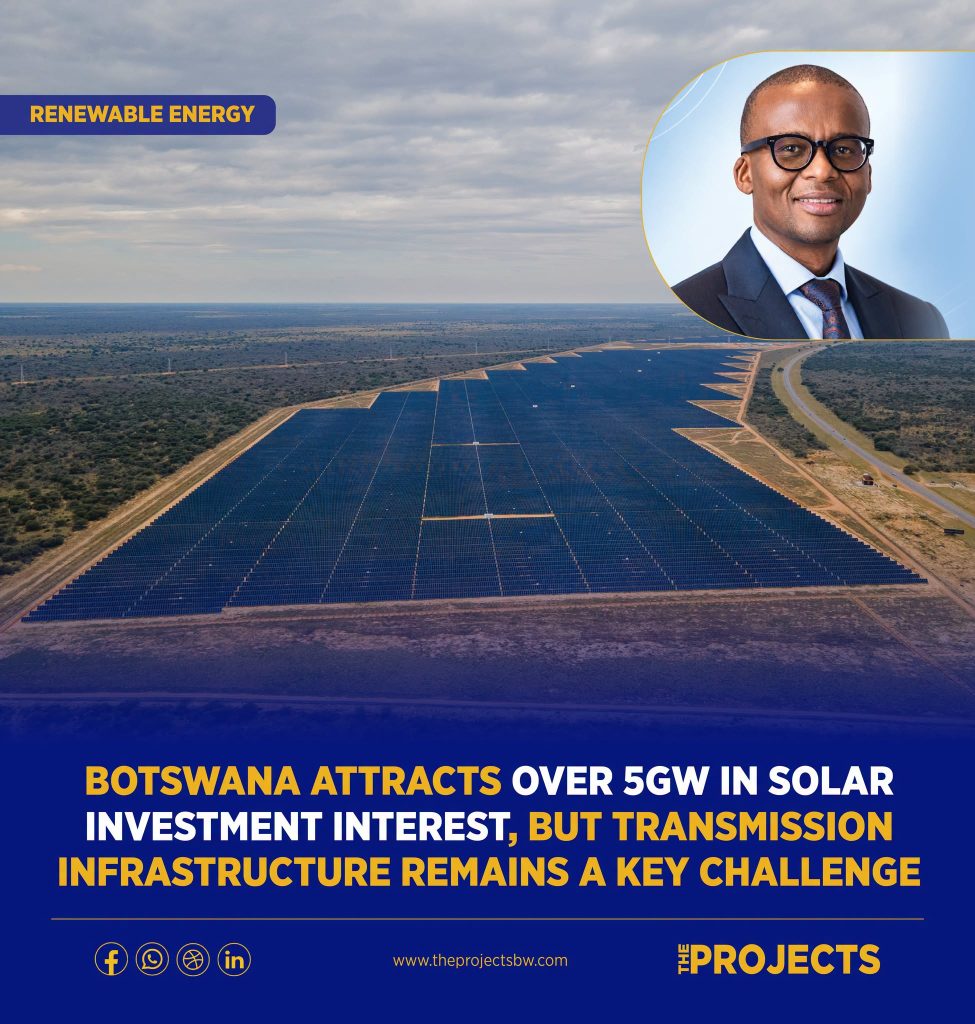
Botswana has attracted investor interest in excess of 5 gigawatts (GW) of potential solar energy capacity, but the development of critical transmission infrastructure and supporting regulatory frameworks remains central to unlocking these investments.
Vice President and Minister of Finance Ndaba Gaolathe says investors are already willing and financially prepared to develop solar power projects in the country, with Botswana’s high solar irradiation levels making it an attractive destination for renewable energy investment.
However, he explained that the initial delays in advancing these projects were not necessarily due to a shortage of investors, but rather the country’s limited capacity to transmit and evacuate the electricity generated, particularly for export into regional markets.
Gaolathe said government must first establish the necessary transmission infrastructure to accommodate additional generation capacity, alongside legal and regulatory frameworks governing electricity wheeling, pricing and access to the national grid.
These frameworks are particularly important in attracting external financing for large-scale transmission projects, which require substantial capital investment.
He indicated that work on these enabling requirements is now at an advanced stage, with the Botswana Power Corporation (BPC) working alongside the Ministry of Minerals and Energy on the necessary regulatory arrangements.
Botswana is currently working towards developing approximately 700 megawatts (MW) of solar power capacity, while surplus generation could be channelled towards electricity exports and energy-intensive industries, including data centres and artificial intelligence computing infrastructure.
The development of affordable, reliable electricity could therefore create opportunities beyond the traditional power sector, positioning Botswana to attract investment in digital infrastructure and other industries requiring significant energy capacity.
Gaolathe’s remarks highlight a shift in the country’s investment challenge: from attracting renewable energy investors to building the infrastructure and regulatory environment required to convert investor interest into operational projects.
Unlocking the reported 5GW investment pipeline will depend largely on how quickly the country can mobilise financing, expand its transmission network and establish a framework that gives independent power producers and financiers the confidence to commit capital.